Fall Plumbing Prep in Chicago: Prevent Freeze Damage Before Temperatures Drop

Chicago’s first frost typically lands around Oct. 15 across the greater metro area, with O’Hare seeing its average first freeze near Oct. 23. Plenty of homeowners still get caught off guard when it hits. Fall plumbing prep Chicago style means checking your pipes, sump pump, water heater, and drains before that first hard freeze arrives. If you need supplies or guidance along the way, stop by our Chicago showroom at 6949 W. Irving Park Rd. or call us at 773-777-2670.
Why Chicago’s Fall Weather Threatens Your Plumbing
Freeze damage can start as soon as temperatures first dip below 32°F, often weeks before winter officially begins. Burst pipes are the leading cause of winter-weather property damage according to the Insurance Institute for Business and Home Safety, and the financial toll backs that up. State Farm handled more than 20,000 winter-water claims between 2024 and June 2025, paying out over $628 million, with average claims topping $30,000.
Freeze-Thaw Cycles and Pipe Stress
Water freezes at 32°F, but the real danger threshold is 20°F. At that outdoor temperature, unused exposed pipes can freeze in roughly four hours, based on field tests from the University of Illinois Building Research Council. Pipes near the freezing point go through repeated cycles of expansion and contraction, and that stress weakens pipe walls over time, particularly in older galvanized steel plumbing. When a pipe does burst, it usually happens between the frozen section and the faucet, where pressure builds up with nowhere to go.
Why Older Chicago Homes and Basements Are Especially Vulnerable
Chicago’s housing stock adds another layer of risk. Neighborhoods like Wicker Park, Lincoln Square, and Rogers Park are full of homes built before 1980, many still running on galvanized steel or cast iron piping that corrodes and narrows with age. Pre-1960 two-flats and three-flats often route supply lines through uninsulated exterior masonry walls, and north- or northwest-facing exposures tend to freeze first. Bungalow-style homes commonly run supply lines through crawl spaces along rim joists, another weak point. Add in Chicago’s flat, clay-heavy terrain, which drains poorly, and you can see why unheated basements, crawl spaces, garages, and exterior walls carry the highest freeze risk in older Chicagoland properties.
Your Fall Plumbing Prep Checklist
A little fall plumbing maintenance now can help reduce risk later. Work through these tasks before that first freeze hits.
Insulate Exposed and Vulnerable Pipes
Pipes running through unheated basements, attics, garages, cabinets, and exterior walls are the most at risk. Foam sleeves and UL-listed heat tape are both common, accessible options for added protection, and you’ll find plumbing products like these in our showroom. Opening cabinet doors under sinks also helps warm air circulate around pipes, which may help reduce risk on especially cold nights. No product guarantees full freeze protection, but combining insulation with good air circulation gives your pipes a real fighting chance.
Shut Off and Disconnect Outdoor Faucets and Hoses
Disconnect and fully drain garden hoses before the first freeze. Cover outdoor spigots and make sure any unused outdoor fixtures are drained completely. Sprinkler and irrigation systems need to be shut off and blown out, but that work is best left to someone who understands the system’s specific requirements.
Test and Maintain Your Sump Pump
If your home sits in a low-lying area or has an older drainage system, your sump pump is doing more work than you might realize. Test it now by pouring water into the pit. If the pump activates and drains well, it’s working as it should. Slow or no activation is a sign it needs maintenance or replacement. Keep discharge lines clear and make sure water is directed away from your foundation.
Chicago-area municipalities enforce their own discharge rules, and most prohibit sending water onto sidewalks or streets, so check with your local building department before finalizing your setup. City code also requires sump pits to be at least 18 inches in diameter and 30 inches deep, with accessible, gravity-fed drainage.
If you’re shopping for a replacement, our selection of submersible sump pumps includes options suited to different basin depths, discharge distances, and water volumes.
Inspect Your Water Heater Before Winter Demand
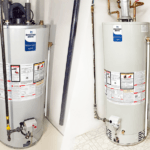
Winter puts more demand on your water heater, so fall is the right time for a checkup. Test the T&P relief valve and flush any sediment buildup. Check the anode rod too, and replace it once it’s more than 75% corroded. A rotten-egg smell, rusty water, or sediment flakes are all signs the anode rod needs attention. Set your thermostat to 120°F for safe, efficient operation. Homeowners can typically handle sediment flushing and anode rod replacement themselves, but issues like a clogged drain valve or water quality concerns are better left to a professional.
If you’re due for a full replacement, our showroom carries water heater brands you can compare in person.
Clear Drains and Check for Slow-Moving Clogs
Fall leaves are notorious for clogging exterior drains, so mesh guards on drains, gutters, and downspouts are worth installing. Clean gutters also help prevent ice dams later in the season. Indoors, grease solidifies as it cools, which means slow kitchen drains often get worse once temperatures drop. Watch for multiple fixtures slowing at once, gurgling sounds, sewer odors, or only brief relief after plunging. These point to a worsening clog rather than a minor annoyance.
Before winter sets in, run through this list: Insulate exposed pipes in basements, attics, garages, and exterior walls. Disconnect, drain, and store garden hoses. Cover outdoor spigots and drain unused fixtures. Test your sump pump and clear discharge lines. Flush your water heater and check the anode rod. Install mesh guards on exterior drains and clean gutters. Locate your main water shutoff valve.
Checking for Leaks and Basement Moisture Issues
Small leaks often go unnoticed until they become expensive problems, and Chicago’s clay soil and older basements make moisture monitoring especially important heading into winter.
Common Leak Warning Signs Before Winter
An unexplained jump in your water bill, the sound of running water with no obvious source, or a water meter that keeps moving when every fixture is off are all classic leak signs. To check, shut off every fixture in your home and watch the meter; if it’s still moving, you’ve got a leak somewhere. The EPA estimates that the average household loses about 10,000 gallons annually to leaks, and roughly 1 in 10 homes wastes 90 or more gallons a day.
Freeze-specific red flags include frost or condensation on pipes, unusual pressure fluctuations, banging or whistling sounds, and ice forming on exterior faucets or meters. If you spot cracking, bulging, or dripping near a section you suspect is frozen, shut off your water immediately and call a professional. Pressure may have already caused internal damage even before it’s visible.
Managing Basement Moisture and Humidity
A musty smell, visible mold or mildew, or stains creeping across walls and ceilings often trace back to excess basement humidity. ASHRAE Standard 55 allows indoor relative humidity up to 60%, while the EPA recommends a healthy general range of 30-50% for most homes. In cold-climate winters, aim for 30-40% to help prevent condensation. Mold can start developing within just 24-48 hours once humidity climbs too high, so it pays to check often. We recommend using a standalone hygrometer rather than relying on your dehumidifier’s built-in display, since those readings aren’t always accurate.
DIY Prep vs. Calling a Licensed Plumber
Fall plumbing prep in Chicago blends tasks homeowners can safely tackle with work that requires a licensed plumber. Knowing where that line falls protects your home and keeps you code-compliant.
| Task | Who Can Handle It | Why It Matters |
|---|---|---|
| Draining outdoor hoses | Homeowner | Simple, low-risk, prevents surface freeze damage |
| Insulating exposed pipes | Homeowner | Reduces freeze risk without code implications |
| Sump pump testing | Homeowner | Confirms basic function, spots early warning signs |
| Sump pump repair/replacement | Licensed plumber | Involves code compliance and system integration |
| Water heater flushing | Homeowner | Routine maintenance task, low complexity |
| Water heater installation or gas line work | Licensed plumber | Code-regulated, safety-critical |
| Sprinkler/irrigation winterization | Licensed professional | Requires specialized equipment and system knowledge |
| Main shutoff valve replacement | Licensed plumber | Permit-required, code-regulated plumbing work |
What Homeowners Can Handle Themselves
Draining and disconnecting hoses, insulating exposed pipes, testing your sump pump, clearing visible debris from drains, and locating your main shutoff valve are all manageable DIY tasks. In fact, we’d encourage every homeowner to treat finding that shutoff valve as a household habit, not something you scramble to locate during an emergency.
Signs You Need Professional Help
Sump pump repairs, water heater servicing, sprinkler and irrigation winterization, and any code-regulated work such as main shutoff valve replacement or backflow prevention should go to a licensed pro. Chicago plumbing work is governed by local building codes, and many projects require permits, so DIY shortcuts aren’t a code-compliant option.
Before hiring anyone, verify their credentials through the Illinois Department of Financial and Professional Regulation, or IDFPR. Their website lets you search by name or license number to confirm the person working on your home is properly licensed and in good standing. It only takes a couple of minutes and gives real peace of mind.
Getting the Right Supplies for Winter Prep
Having the right materials on hand makes fall plumbing prep in Chicago far less stressful. At Allied Plumbing and Heating Supply, we carry Chicago plumbing supplies including pipe insulation, shutoff valves, sump pumps, sewage and dewatering pumps, utility pumps, and water heaters.
We work with both licensed plumbers and DIY homeowners, so whether you’re tackling a small fix or coordinating a bigger project with your contractor, our team can help you find what fits. Stop by the showroom at 6949 W. Irving Park Rd. to see working displays in person, or call 773-777-2670 with questions about what you’ll need this season.
Schedule Your Fall Plumbing Inspection Today
Freeze damage prevention starts with a few focused hours now, not a scramble once temperatures crash. Insulate what’s exposed, test your sump pump, service your water heater, and know where your shutoff valve is. For anything beyond that, lean on a licensed plumber you can verify through IDFPR.
Ready to Get Started?
If you’re ready to gather supplies or want guidance on your specific setup, contact us today. Our team will help you get your home ready for whatever this Chicago winter brings.