Utility Pump vs. Sump Pump: Which One Do You Need for Water Removal?
Picking between a utility pump and a sump pump comes down to one question: is the water a recurring problem or a one-time job? The two tools look similar on a shelf, but they are built for very different duties. At Allied Plumbing & Heating Supply Co., we help Chicago homeowners and contractors sort this out every week. If you would rather talk it through, call our Irving Park Rd. showroom at (773) 777-2670 and our team can help you compare options.
This guide covers how each pump works, where they differ, and the cases where neither one is the right answer.
Utility Pump vs. Sump Pump: The Short Answer
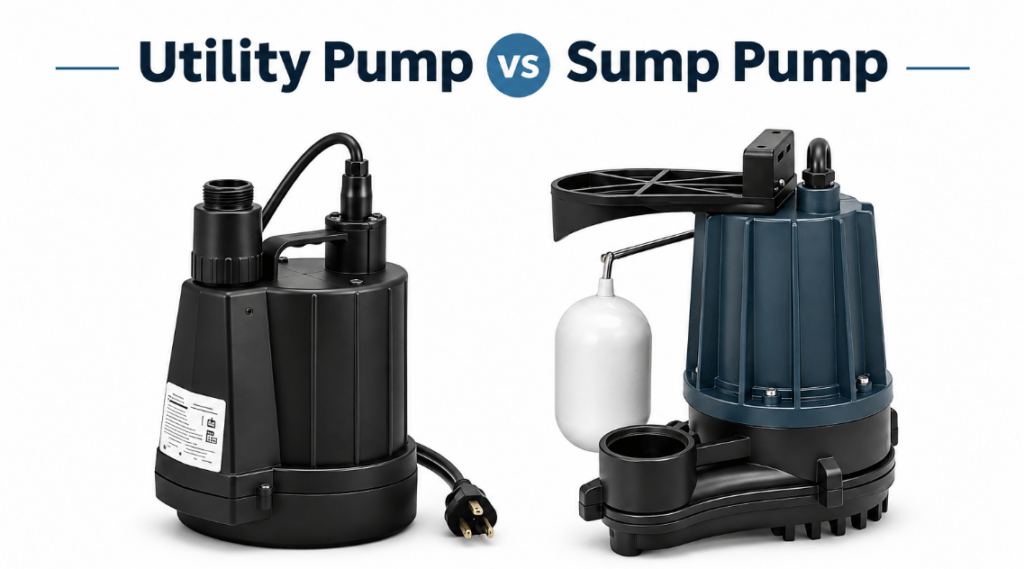
A sump pump is a permanent, automatic, pit-based fixture that handles water that keeps coming back. A utility pump is a portable tool for removing standing water, and it is usually non-automatic. That last word matters, because some utility pumps do offer automatic operation, such as Zoeller’s Model 44.
So in the utility pump vs sump pump decision, choose a sump pump for recurring basement water and a utility pump for temporary removal or transfer. The categories can overlap, so the intended application and the manufacturer’s instructions matter more than the label on the box.
What a Sump Pump Does: Permanent, Automatic Basement Protection
A sump pump removes groundwater that collects in a pit, so no one has to run it each time water rises. It only moves collected water out, so seepage itself continues.
Pit-Based Operation and Float Switches
Foundation drainage or seepage fills the pit. A float or sensor rises with the water and the pump starts. When the level drops, the pump stops. That is why the float needs room to move freely.
Zoeller’s Model 63 is a submersible, fully automatic example with a built-in float-operated switch. Its on and off points are 7-1/4 inches and 3 inches, and it comes with 9-, 15-, or 25-foot cord options. Pit size and switch settings affect how often a pump cycles, and a poor match may cause frequent starts and extra wear.
Pedestal vs. Submersible Sump Pumps for Chicago Basements
Chicago basements face heavy spring rain, snowmelt, and older housing stock, often with combined sewer or storm conditions on top. Those conditions make the pump style a real decision, though neither style is always better.
A submersible sits in the pit water and tends to run quieter while moving larger volumes. A pedestal pump keeps its motor above the pit, which makes the motor and float switch easier to reach for maintenance, though it can be louder. Zoeller’s Model 84 (1/2 HP) and Model 81 (1/3 HP) are pedestal examples. Our submersible sump pumps category includes Zoeller Model 53 and 57/59 pumps and the Liberty Pumps 230 Series.
Protection depends on the whole system: pit, pump, switch, discharge piping, and maintenance. Battery backup and check valves are worth discussing with a licensed plumber.
What a Utility Pump Does: Portable Standing-Water Removal
A utility pump is a portable tool for temporary dewatering of pools, basements, crawl spaces, and work areas. You place it where the water is, run it, and move it to the next task. People searching for the best portable sump pump are often really looking for a portable utility pump like this.
Our utility pumps category includes a Liberty Pumps Model 331 listing. Zoeller’s Model 42 is a portable, non-automatic 1/6 HP pump for pools, hot tubs, pool covers, basements, and crawl spaces. It draws water to within 1/8 inch of a flat surface and has a screened bottom intake that helps keep solids out. Its discharge options include a garden hose adapter, 1-inch NPT, or 1-1/4-inch slip fit.
Construction Cleanup, Drainage Projects, and Temporary Jobs
On a jobsite, a utility pump handles the water that shows up unannounced. Zoeller’s Model 46 is a non-automatic 1/2 HP pump with a 2-inch NPT discharge that draws down to within 1 inch. Model 311 is a lightweight, non-submersible pump with 3/4-inch garden-hose connections, a 6-foot strainer suction hose, and a carrying handle. It suits water heaters, washing machines, and radiant-heating lines.
Zoeller describes the Model 314 transfer pump as a tool for a garage or jobsite pickup. It is a non-automatic 1/2 HP, 115 V pump rated at more than 1,400 GPH and almost 50 PSI.
Don’t assume a pump rated for clean water will work on dirty jobsite water. Check the debris limits before you start.
Utility Pump vs. Sump Pump: Key Differences
The difference shows up in where the pump works, how it starts, and how long it can run.
| Pump Type | Typical Use | Installation/Placement | Operation | Solids Handling | Portability | Best Applications |
|---|---|---|---|---|---|---|
| Sump pump, submersible | Recurring groundwater removal | Sits in the sump pit, underwater | Automatic with a float or sensor, or non-automatic with an external control | Model 53 family handles 1/2-inch spherical solids | Fixed in place | Basements with ongoing seepage |
| Sump pump, pedestal | Recurring groundwater removal | Motor mounted above the pit | Typically automatic with a float switch | Model-specific | Fixed in place | Pits where easy motor and switch access matters |
| Utility pump | Temporary removal or transfer | Placed in or beside standing water | Usually non-automatic; some models offer automatic | Models 42, 44 and 46 use a screened bottom intake to keep solids out | Portable | Pools, covers, crawl spaces, jobsite water, tanks |
Permanent vs. Portable Use and Automatic Operation
Once installed, a sump pump sits in its pit and runs unattended. Utility pumps travel from job to job, and someone usually has to stay close by.
Automatic utility pumps exist, though they’re the exception. Zoeller’s Model 44 (1/4 HP) comes in automatic and non-automatic versions. The automatic LM44 pumps down to 1/8 inch, then turns on every 3 minutes for 5 seconds to check for water. If it senses water, it keeps pumping, and if not, it shuts off. That timed check suits shallow cleanup, but it’s not the same as a sump pump’s float-triggered response to rising water.
Horsepower, Flow Rate, and Discharge Considerations
Horsepower alone does not tell you how much water a pump will move. Two pumps with similar motors can deliver different flow because of their design and operating conditions.
Zoeller’s Model 53 family shows why. It has a 1-1/2-inch NPT discharge, a 19.25 ft maximum head, and a 43 GPM maximum flow. The performance curve plots flow against head, so maximum flow is not guaranteed at every discharge height. Vertical lift, hose length, kinks, and fittings all reduce delivery. Discharge connections matter too, and our team can walk you through the options.
Which Pump Matches Your Situation?
Start by identifying the water source. Groundwater, plumbing leaks, surface runoff, and sewer backups each call for different fixes, even when pumping is part of the response. If your needs come from seepage, you probably need a pump that runs without help. If it is a single event, a portable tool may be enough.
Recurring Basement Seepage vs. One-Time Flooding
If water returns after every storm, you need a sump pump. That’s a pit-and-automatic-pump problem, and the pit, the expected inflow and the discharge route are the first things to look at.
A single wet event calls for a utility pump instead. Examples include a drained water heater or tank, a window well, or a pool cover. A utility pump can clear accessible standing water in a flooded basement, though most pumps leave a thin film behind.
Contractors, Property Managers, and Remodelers: Jobsite and Building Needs
Contractors and remodelers often need jobsite dewatering or a way to clear trench and foundation excavation water, so portability, hose compatibility, and debris limits come first. Property managers handling tenant-building basement concerns should weigh automatic operation, inspection access, alarms, and backup protection.
Allied PHS helps trade customers find what they need quickly. Call (773) 777-2670 or use our online contact form, and we can talk through lift, discharge distance, and water conditions with you.
Safety comes first. Do not enter a flooded area with energized electrical equipment. Shut off power only if it is safe to do so, and call a qualified electrician.
Can a Utility Pump Replace a Sump Pump?
Generally no. A utility pump may offer temporary help during an emergency, but it lacks the automatic, pit-based design of a sump system. Most are not meant for unattended, continuous duty, which is what a basement pit demands during a storm.
The manufacturer’s own documents point the same way. Zoeller’s Model 42 is non-automatic and intended for temporary use, and the LM44 sheet states that model is not to be used as a sump pump. Even a timed utility pump should not be treated as equivalent to a sump pump. For long-term basement protection, choose equipment expressly intended for sump service.
How to Choose the Right Water Removal Pump: Specs That Matter
Compare specs against the actual job, and look past price and horsepower. Final sizing should follow the manufacturer’s guidance and a licensed professional.
- Horsepower, as one factor among several.
- Flow rate in GPH or GPM, read from the pump curve at your actual lift.
- Maximum head or lift, which marks the pump’s limit and is a poor number to run it at.
- Discharge size and connection type.
- Solids handling and intake screening.
- Switch type, whether automatic, piggyback, or non-automatic.
- Power requirements, including voltage and cord length.
- Build materials listed in the manufacturer’s specifications.
Verify compatibility with your pit size, discharge plumbing, power supply, and local code before buying. If you want a broader look at what we carry, browse our plumbing products.
When to Get Product-Selection Help (and When Neither Pump Fits)
Ask for help when lift, discharge distance, inflow, pit dimensions, or water quality are uncertain. Bring your measurements, water source, discharge route, pipe or hose size, and available power. Our team can help evaluate product options and compatibility by phone or contact form.
Some situations call for different equipment or a professional:
- Sewage or effluent needs, since sewage and ejector pumps are not interchangeable with sump pumps.
- Persistent structural water problems that pumping will not fix.
- Large-scale flooding.
In those cases, contact a licensed plumber or waterproofing professional. Discharge, permits, and electrical work may involve local code, so check with the City of Chicago or a licensed plumber. Never attempt work that requires a licensed plumber or electrician yourself.
FAQs
Is a utility pump automatic? Usually not, but some are. Zoeller’s LM44 is an automatic version of the Model 44, though it’s still meant for utility use, not sump service.
Can a utility pump clear a basement floor? It can remove accessible standing water, and some models draw down to 1/8 inch or 1 inch. Expect a thin film to remain.
Browse Utility and Sump Pumps at Allied Plumbing & Heating Supply Co.
Allied PHS is a family-owned Chicago supplier with more than 30 years of serving trade customers and homeowners. We offer a curated selection from leading manufacturers, including Zoeller and Liberty Pumps, with in-store guidance to match. Explore our utility pumps and submersible sump pumps, and ask our showroom staff about warranty coverage on any model.
Visit or Call Our Showroom
Have your pit measurements, lift, discharge distance, and water conditions ready, and our team will help you match the pump to the job. Visit us at 6949 W. Irving Park Rd., Chicago, IL 60634, call (773) 777-2670, or contact us online.