
Water Heater Replacement Checklist: What to Measure and Decide Before You Buy
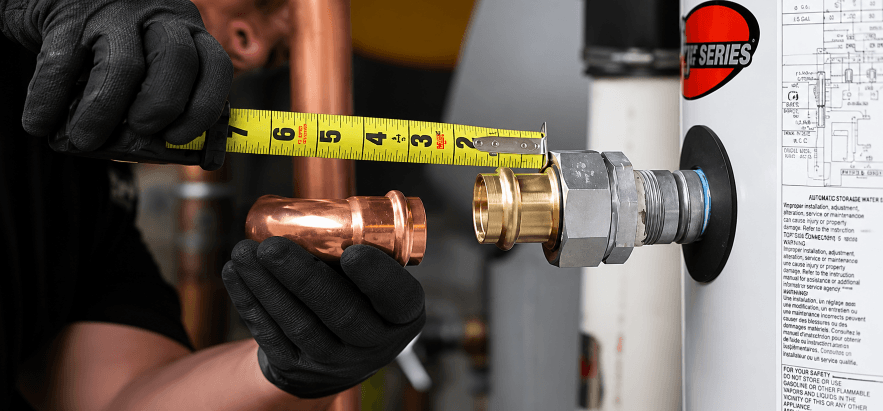
Replacing a water heater feels straightforward until you’re standing in a utility room with a tape measure and a list of questions you weren’t prepared for. Get the wrong unit and you’re looking at failed inspections, extra labor costs, and a system that can’t keep up with your household from day one. Working through a proper water heater replacement checklist before you spend anything takes care of all that upfront.
If you’d like help narrowing down options before you buy, our team at Allied Plumbing & Heating Supply Co. is available at (773) 777-2670 or in person at our showroom on Irving Park Rd.
Step 1: Measure Your Physical Installation Space
Before comparing models or fuel types, spend time carefully measuring the physical space where the unit will sit. The dimensions of that space directly determine which models are eligible for your home.
Tank Height, Diameter, and Clearance Requirements
Measure the full height of the installation area from floor to ceiling or the lowest obstruction above the unit. Then measure the available width and depth. Most standard tank water heaters range from 46 to 62 inches tall and 18 to 28 inches in diameter, but compact models exist for tighter spaces.
Chicago code requires a minimum passageway of 30 inches high by 22 inches wide to reach the water heater, with a level service space at least 30 inches deep by 30 inches wide at the front and service side. Gas units must not be installed in habitable rooms unless placed in a properly designed enclosure with adequate combustion air. Confirm these requirements with your licensed plumber before purchasing.
Drain Pan, Floor Space, and Access Considerations
Chicago code requires that water heaters installed on the second floor or above sit in a safe-pan with a drain piped to a floor drain. Even on the ground floor, a drain pan is best practice anywhere a leak could cause structural damage. Measure the floor area to confirm a drain pan of the appropriate diameter will fit, and verify it can be plumbed to a nearby drain.
Also consider access for service. Tight closets and alcoves can complicate maintenance calls significantly. If you’re replacing a unit in a confined area, verify that the new unit’s dimensions allow a technician to reach connections and components without disassembling other parts of the system.
Step 2: Identify Your Fuel Type and Venting Setup
Your home’s existing infrastructure plays a defining role in which replacement units make sense. Switching fuel types or reconfiguring venting adds cost and complexity to what could otherwise be a direct replacement.
Gas, Electric, or Other: Matching Your Existing Connection
A like-for-like fuel swap keeps installation straightforward. You already have a properly sized line, shutoff valve, and venting pathway in place. Switching from gas to electric requires adding or upgrading a dedicated 240-volt circuit, which adds labor and material cost. Switching from electric to gas requires running a new gas line. Confirm your existing connection type and capacity before deciding whether to match or change fuel sources.
Venting Configuration for Tank and Tankless Units
Gas water heaters require a venting pathway to exhaust combustion gases. Atmospheric vent units rely on natural draft through a vertical flue. Power vent models use a blower to push exhaust gases horizontally through PVC piping, which allows more flexible placement but requires a nearby electrical outlet. Direct vent units pull combustion air from outside through a sealed two-pipe system, a good option for interior spaces with limited combustion air.
Tankless gas water heaters often require new venting because their condensing or non-condensing configurations differ from traditional tanks. If you’re upgrading to a tankless unit, factor in the cost and feasibility of modifying the vent pathway before committing to a model.
Step 3: Size Your Water Heater to Match Household Demand
A well-sized water heater keeps up with your household without wasting energy heating water you never use. Undersizing leads to shortages; oversizing wastes fuel and money.
First-Hour Rating and Gallon Capacity for Tank Units
For storage tank water heaters, two numbers matter most: gallon capacity and the first-hour rating (FHR). The FHR tells you how many gallons of hot water the unit can deliver in the first hour of use, starting from a full tank. It factors in both stored volume and the amount the unit can reheat during that hour.
A household of two generally manages with 30 to 40 gallons. Three to four people typically need 40 to 50 gallons; larger households often require 50 to 80 gallons. Check the FHR on the unit’s Energy Guide label rather than relying solely on tank size. The FHR is a more reliable indicator of real-world performance during busy morning routines or back-to-back showers.
GPM Flow Rate Sizing for Tankless Systems
Tankless water heaters don’t store water, so capacity is measured in gallons per minute (GPM). To determine the right GPM rating, add up the flow rates of all fixtures you might run simultaneously. A typical shower runs at 1.5 to 2.5 GPM; a kitchen faucet flows around 1.0 to 1.5 GPM. Running two showers while someone does dishes could demand 5 to 7 GPM.
Keep in mind that incoming groundwater temperature affects performance. In Chicago, colder groundwater means a tankless unit works harder to reach the set temperature, effectively reducing its functional GPM output during winter months. Size accordingly.
Step 4: Factor In Recovery Rate and Peak Usage Needs
Even a correctly sized tank unit can fall short during heavy use if its recovery rate isn’t sufficient. Recovery rate refers to how quickly the unit can reheat a full tank after depletion, measured in gallons per hour.
Gas water heaters generally recover faster than electric models because of their higher burner input. A 40-gallon electric unit typically takes 60 to 90 minutes to fully recover, while a comparable gas unit can do it in 30 to 40 minutes. If your household has peak demand windows, such as multiple people showering before work, a higher recovery rate directly affects daily comfort. Include recovery rate alongside tank size and FHR when reviewing your options.
Step 5: Understand Chicago Code and Installation Requirements
Water heater installation codes protect both occupants and the structure of the home. In Chicago, these requirements are specific, and skipping the permit process can result in fines, failed inspections, or insurance complications.
Permit Requirements and Local Code Considerations
Chicago requires an Easy Permit through the Department of Buildings for water heater replacements, including tank-for-tank swaps. This is typically issued the same day. The permit triggers an inspection verifying proper venting, pipe connections, and code-compliant placement.
Chicago code also requires a shut-off valve in the cold water supply line near the tank and a new pressure-temperature (T&P) relief valve with each new unit installation. If you’re working with a licensed plumber, they should handle the permit as part of the job. If you’re managing the project as a homeowner, contact the Department of Buildings to confirm current requirements before scheduling installation.
Expansion Tanks, PRV Specs, and Professional Installation
Closed plumbing systems, common in homes with a pressure-reducing valve (PRV) or check valve at the meter, require an expansion tank alongside the water heater. When water heats, it expands approximately 2%. In a closed system, that expanded volume has nowhere to go, creating pressure buildup that can damage the tank and its valves, and stress connected fixtures over time.
If your home has a PRV or backflow preventer on the supply line, an expansion tank is required. It must be properly sized to the water heater volume and system operating pressure. A licensed plumber can confirm whether your system is closed and whether a PRV adjustment is also needed. Do not skip this step, as improper pressure management is both a safety and code issue.
Your Water Heater Replacement Checklist at a Glance
Use this list on-site to confirm everything before you purchase:
- Measure installation space: height clearance, side clearances, floor footprint, and available diameter
- Confirm Chicago code minimums: 30″ high x 22″ wide passageway, 30″ deep x 30″ wide service space at the front
- Determine drain pan requirement (required on second floor and above; best practice elsewhere)
- Confirm fuel type: gas, electric, or other, and verify existing connection capacity
- Identify venting configuration: atmospheric, power vent, or direct vent; note tankless units may require different exhaust and intake setups
- For tank units: determine needed gallon capacity and FHR based on household size and simultaneous use
- For tankless units: calculate combined GPM demand across simultaneous fixtures; adjust for Chicago’s cold groundwater temperatures
- Review recovery rate against peak demand windows
- Confirm whether your system is closed (PRV or check valve present); if so, plan for an expansion tank
- Verify PRV specs and incoming water pressure
- Pull an Easy Permit through Chicago’s Department of Buildings before installation begins
- Confirm new unit comes with, or plan to install, a new T&P relief valve and shut-off valve on the cold supply line
- Hire a licensed, insured plumber experienced with the specific equipment type
Shop Water Heaters at Allied Plumbing & Heating Supply Co.
Once you’ve worked through your measurements and know what you need, we invite you to browse our water heaters at Allied PHS before finalizing your purchase. Our showroom at 6949 Irving Park Rd. in northwest Chicago carries a full selection of tank and tankless water heater options from trusted manufacturers, and our team can help match the right unit to your specific installation requirements.
Whether you’re a homeowner working through your first replacement or a contractor looking for a reliable trade supplier, we’re here to help. Stop in with your measurements or call us at (773) 777-2670 for product guidance before you buy.