
Atmospheric Vent vs. Power Vent Water Heaters: What Chicago Buyers Should Know
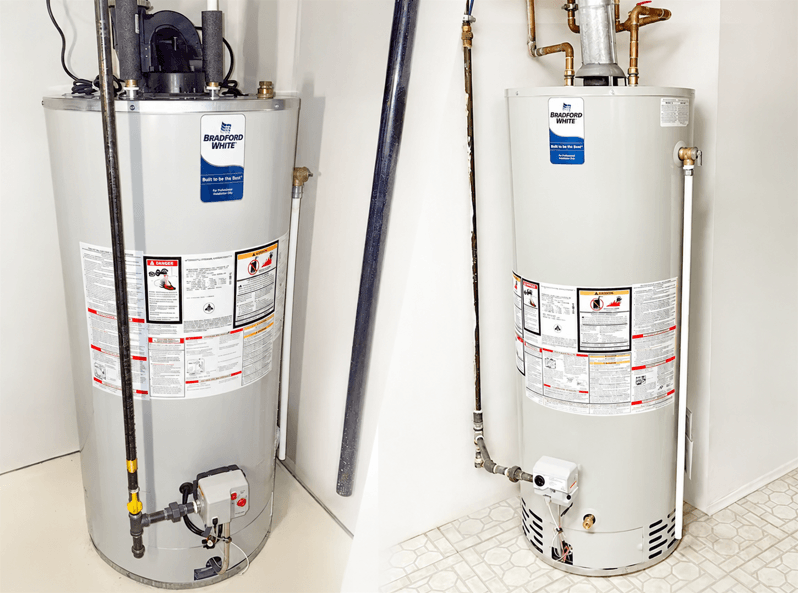
Replacing a water heater sounds simple until you realize your basement doesn’t have a chimney, or your utility closet has no vertical path to the roof. That’s usually the moment the atmospheric vent vs power vent water heater question becomes real for Chicago homeowners and contractors alike. The two systems vent combustion gases in fundamentally different ways, and picking the wrong one for your home’s layout can mean unexpected installation costs, code complications, or both.
We’ve spent over 30 years at Allied Plumbing & Heating Supply Co. helping Chicagoland homeowners, contractors, and remodelers sort through exactly this kind of decision. If you want to skip ahead and see what’s available, you can browse water heaters at Allied PHS anytime, or keep reading to understand which venting type may actually fit your setup.
Atmospheric Vent vs. Power Vent: Why This Choice Matters for Chicago Buyers
The venting method affects efficiency, noise, electrical dependence, and whether your existing chimney can be reused at all. In much of Chicago’s older housing stock, a masonry chimney or vertical flue is already in place, and that usually settles the question before you start shopping. Newer construction, finished basements, and interior utility rooms tend to push the other way. Get the match wrong and a same-day swap becomes a multi-day project involving new pipe runs or electrical work.
Here’s how the two compare:
| Category | Atmospheric Vent | Power Vent |
|---|---|---|
| Venting Method | Natural convection through a vertical flue/chimney | Electric blower pushes exhaust horizontally through PVC, ABS, or CPVC |
| Installation Flexibility | Requires existing vertical chimney or vent pipe | Can vent through walls or roofs without a chimney |
| Noise | No fan; quiet operation | Produces an audible hum from the blower motor |
| Power Dependence | None; continues heating during outages | Depends on electricity; outages can affect operation |
| Best-Fit Applications | Homes with an existing masonry chimney or vertical flue | Basements or interior rooms without chimney access |
| Maintenance Needs | Chimney/flue condition checks | Blower motor and vent pipe checks |
Power Direct Vent, a closed-combustion two-pipe variant of power venting, is worth knowing about as well, and we’ll cover it briefly below.
How Atmospheric Vent Water Heaters Work
An atmospheric vent water heater relies on natural convection. As combustion gases heat up inside the unit, they rise on their own and exit through a vertical flue, without any fan or blower assistance. This venting method has been standard in residential water heaters for decades, and it’s likely what’s currently installed in your home if the unit sits near an existing chimney.
Natural Draft Venting and Chimney Requirements
Natural draft, or atmospheric venting, depends entirely on having a clear, properly sized vertical path for exhaust gases to escape. That typically means a masonry chimney or a dedicated metal vent pipe running straight up through the structure. The flue needs correct sizing and slope to draft properly; a chimney that’s cracked, blocked, or oversized for the appliance can cause backdrafting, where combustion gases spill back into the living space instead of venting outside. Chimney liner rules and specific requirements vary by building age and jurisdiction, so if you’re unsure about your chimney’s condition or code status, that’s a conversation for a licensed contractor rather than a guess.
Homes and Situations Best Suited to Atmospheric Vent Units
Atmospheric vent water heaters tend to fit best in homes that already have a functioning chimney or vertical vent pipe positioned near the water heater’s location. This describes a large share of older Chicago homes, where the water heater sits in a basement corner adjacent to existing masonry venting. Because atmospheric units need no electricity to operate, they’ll keep heating water during a power outage, which matters in a city where storms occasionally knock out power for stretches at a time.
Bradford White’s atmospheric models, available through Allied PHS, include the Defender Safety System with Advanced ScreenLok Technology, along with Vitraglas tank lining paired with Microban, and some variants add a fan-assist blower or automatic flue damper for improved draft control. It’s worth noting that non-condensing atmospheric units are gradually being phased out in favor of condensing, high-efficiency water heater venting technology, so availability of certain configurations may shift over time.
How Power Vent Water Heaters Work
A power vent hot water tank uses an electric blower to actively push combustion gases out of the home, rather than relying on natural rise alone. That fan-driven design is what lets these units vent in directions and distances that atmospheric venting simply can’t manage.
Fan-Assisted Venting and Flexible Vent Pipe Routing
Because the blower creates positive pressure, power vent units can route exhaust horizontally through PVC, ABS, or CPVC pipe rather than requiring a straight vertical chimney run. Power vent units need a nearby electrical outlet, since the blower runs on standard household current and typically ships with a power cord attached. Exact voltage and cord length vary by model, so check the spec sheet on whatever unit you’re considering against where your outlet actually is. This opens up water heater vent installation options in homes where a vertical path to the roof doesn’t exist or isn’t practical to build.
There’s also a variant worth knowing about called Power Direct Vent, which uses a closed-combustion, two-pipe design: one pipe draws in outside combustion air, the other exhausts gases, rather than pulling air from the room. This two-pipe configuration allows for notably longer runs, up to 25 feet using 3-inch pipe with as many as three 90-degree elbows, or up to 60 feet using 4-inch pipe. Those figures apply specifically to the Power Direct Vent model and shouldn’t be assumed for a standard single-pipe power vent unit.
Homes and Situations Best Suited to Power Vent Units
Power vent units typically make sense in basements without an existing chimney, interior utility rooms with no vertical path to the outside, or homes where the current atmospheric system has developed backdrafting problems. They’re also a common choice in additions or remodeled spaces where running a new masonry chimney simply isn’t feasible. Bradford White’s power vent lineup shares the same core tank technologies as its atmospheric counterpart, including the ICON System and the Hydrojet Total Performance System, which helps reduce sediment buildup on both venting types over the life of the tank.
Matching Venting Type to Your Existing Setup and Space Constraints
Before deciding between atmospheric vent vs direct vent or power vent options, it helps to walk through a short set of questions about your current setup rather than jumping straight to a purchase:
- Do you have an existing masonry chimney or vertical vent pipe in good, code-compliant condition?
- Is the water heater located in an interior space without any reasonable access to an outside wall or roof penetration?
- Has your current atmospheric unit shown signs of backdrafting or poor draft performance?
- Would switching venting types require new electrical circuits or significant pipe routing through finished space?
- Are you replacing your existing unit in-kind, or considering a change in venting method entirely?
These questions won’t hand you a final answer on their own, but they’ll clarify which direction is worth exploring further with a licensed professional.
Replacing a Like-for-Like Unit vs. Switching Venting Types
There’s an important distinction between swapping in a new water heater that matches your old one’s type, size, and shape versus switching from one venting type to another entirely. In Chicago, in-kind replacement of a residential water heater in buildings up to four stories generally doesn’t require a building permit, though lead-safe work practices still apply. Switching venting types is a different scope of work entirely. It typically involves new vent piping, possible electrical upgrades, and code review that in-kind swaps don’t trigger, so it shouldn’t be assumed to carry the same permit exemption.
Basement, Attic, and Interior Installation Considerations
Where the unit sits in your home matters as much as the venting type itself. Basements with existing chimneys often favor sticking with atmospheric venting, while finished basements or interior utility closets without vertical access frequently push toward power venting instead. Attic installations bring their own accessibility and maintenance concerns, and any interior space being considered for a water heater should be evaluated for both code compliance and practical service access down the line.
Ready to talk through your specific layout? You can shop water heater options with our team’s guidance, or reach out directly if you’d like input before making a final call.
Chicago Code and Professional Installation Requirements
Any water heater installation or venting change in Chicago typically requires a licensed professional, and in many cases a permit, particularly when the venting type is changing. This isn’t DIY territory. Improperly vented combustion gases are a carbon monoxide risk, and Bradford White itself specifies professional installation only. Get a licensed plumber involved before you commit to either direction.
Efficiency, Performance, and Everyday Operation
Efficiency between the two comes down to the specific unit and home rather than the venting method alone. Both categories span a range of efficiency levels, and neither type should be assumed to automatically outperform the other on cost or performance.
Energy Efficiency and Operating Costs
For a representative 40-gallon model with a medium draw pattern, the DOE’s baseline gas storage design, featuring a standing pilot, atmospheric venting, and 2-inch foam insulation, typically lands around a 0.58 UEF, with improvements to roughly 0.61 UEF achievable through better insulation and heat exchange design. Further efficiency gains generally come from removing the standing pilot in favor of electronic ignition, often paired with a flue damper or power venting.
UEF, or Uniform Energy Factor, is the DOE’s standard efficiency metric that replaced the older EF rating in 2017, and most traditional gas water heaters today fall somewhere between 0.63 and 0.95 UEF. ENERGY STAR certification can also be a useful reference point when comparing specific models, though we won’t cite exact figures for Bradford White’s lines here since no directly comparable published rating exists across both product families.
Noise and Power Dependence Considerations
Atmospheric units have no blower, so the only sound is combustion itself. Power vent units add a fan that runs whenever the burner fires, which produces an audible hum. In an unfinished basement most people never notice it; in a finished basement, a utility closet off a bedroom, or a condo, it’s worth factoring in before you commit.
The bigger practical difference shows up during power outages: atmospheric units keep heating water because they need no electricity, while power vent units depend on their blower motor, so outages can affect operation unless backed by a generator or battery system. It’s simply a tradeoff worth weighing against your home’s power reliability and space constraints.
Confirming Compatibility Before You Buy
Before committing to either venting type, it’s worth double-checking a few things: the physical condition of any existing chimney or vent pipe, the available clearance and access in your installation space, and whether your electrical panel has capacity for a power vent unit’s blower motor if that’s the direction you’re leaning. Electric water heaters can also be a reasonable alternative when venting isn’t practical at all, though that often means an electrical panel or capacity upgrade of its own. Confirming these details early, ideally with a licensed plumber’s input, prevents surprises once installation is underway.
Get Help Choosing the Right Water Heater for Your Chicago Property
Deciding between atmospheric and power vent ultimately comes down to your home’s existing infrastructure, available space, and how much flexibility you need in vent routing. Each fits a different set of circumstances well.
We carry Bradford White across both venting types, available online and in our Chicago showroom, and both lines share the same core technologies: the Defender Safety System, Vitraglas tank lining with Microban, the ICON System, and Hydrojet for sediment control. Dimensions vary more than people expect between capacities, so measure your space and your access path before ordering and ask us for the spec sheet on anything you’re considering.
If you’re still weighing the two for your property, our team is glad to talk through your layout and point you toward options that fit.
Talk to Our Team
We also know some buyers just want to ask a plumber a question for free before committing to anything. If that’s you, feel free to contact our team for a venting assessment or general plumbing advice free of pressure to buy on the spot. Getting the venting question right the first time is worth far more than the few minutes it takes to ask.