Sump Pump Discharge Rules and Best Practices in Chicagoland
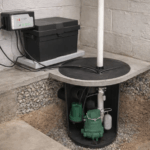
Chicagoland homeowners dealing with wet basements tend to focus entirely on getting a sump pump installed and running. Where that water actually goes is usually an afterthought, and that’s a costly mistake. Sump pump discharge rules in Chicagoland are specific, legally enforceable, and vary from one municipality to the next. Getting it wrong can mean fines, failed inspections, or a flooding problem that gets worse instead of better. Browse our inventory of compliant Sump Systems to start building a setup that meets code from day one.
This guide covers the discharge laws governing Chicago and its surrounding suburbs, what compliant installation actually looks like, and how to protect your home and your wallet by doing it right the first time.
Why Sump Pump Discharge Rules Matter in Chicagoland
Chicagoland sits on flat terrain with clay-heavy soil that drains poorly. During heavy rain, the region’s drainage infrastructure faces enormous pressure. Sump pumps play a direct role in that system, which is exactly why sump pump drainage laws exist. When discharge water goes to the wrong place, it doesn’t just create a neighbor dispute. It can overload the municipal sewer system, cause basement backups across entire blocks, and trigger regulatory penalties.
The Combined Sewer Problem in Older Chicago Neighborhoods
Much of Chicago, particularly in older neighborhoods, relies on a combined sewer system where stormwater and sanitary sewage travel through the same underground pipes. When sump pumps discharge into these sanitary lines, even indirectly, the added volume overwhelms treatment capacity. The result: untreated sewage bypasses the treatment plant and flows into the Chicago River or Lake Michigan during storm events.
This is the core reason Chicago sump pump regulations are so strict. The Metropolitan Water Reclamation District of Greater Chicago (MWRD) has spent decades and billions of dollars managing this problem. Individual homeowners connecting sump pumps to the wrong outlet undermine those investments and contribute directly to regional flooding and water quality issues.
Legal and Financial Consequences of Non-Compliance
Violating sump pump discharge rules is not a theoretical risk. Chicago and many surrounding municipalities conduct inspections, particularly when a home is sold or permitted work is performed. A prohibited connection can halt a real estate transaction, trigger mandatory corrections at the homeowner’s expense, and result in fines.
Beyond legal exposure, an improperly routed discharge pipe can send water toward a foundation, a neighbor’s yard, or a public sidewalk, creating liability that goes well beyond a municipal code violation.
Chicago Plumbing Code: The Sanitary Sewer Prohibition Explained
The foundation of Chicago’s sump pump drainage law is the principle of separation between stormwater and sanitary drainage, established throughout Chapter 18-29 of the Chicago Municipal Code (Title 14P, Plumbing Code). Stormwater and groundwater sources cannot discharge into a system designed to carry sewage to a treatment plant.
Chicago Municipal Code §18-29-712 governs sumps and ejectors, primarily covering sewage pumps that lift wastewater from below-grade fixtures into the sanitary drainage system. The Chicago Department of Water Management’s Sewer Construction Regulations and the Metropolitan Water Reclamation District (MWRD) rules reinforce this separation principle for stormwater discharge.
Homeowners sometimes assume that clean water can go anywhere. The code doesn’t work that way. Sewer system capacity is the concern, not water quality alone. Always verify current requirements and the applicable code section with your local building department, since rules can vary and do change.
Permitted and Prohibited Sump Pump Discharge Locations
Understanding where sump pump drainage can legally go means knowing both the approved options and the explicitly forbidden ones.
Where You Can and Cannot Discharge
The most common compliant discharge location is your own lawn or landscaped area, provided water flows away from the foundation and doesn’t pool against a neighboring property. Some municipalities permit discharge to a dedicated storm sewer or catch basin through a properly installed, permitted connection. Dry wells and rain gardens are increasingly popular compliant alternatives that several Chicagoland municipalities actively encourage as part of stormwater management programs.
The sanitary sewer is the most critical prohibited destination under Chicago’s plumbing and sewer regulations. Sump pump drainage also cannot legally terminate in a way that sends water across a neighbor’s property without consent, onto a public sidewalk, or into a street in a manner that interferes with traffic or drainage infrastructure.
| Municipality/Area | Sanitary Sewer Allowed | Storm Sewer Allowed | Distance Requirement | Notes |
|---|---|---|---|---|
| Chicago / Cook County | No | With permit | Varies by neighborhood | Combined sewers in older areas create additional limitations |
| DuPage County (e.g., Westmont) | No | With permit | 25 ft from Village right-of-way (Westmont); verify locally for other municipalities | Formal permitting process required |
| Galesburg | No | With licensed plumber | 10 ft from rights-of-way | Licensed plumber may be required for storm sewer tie-ins |
| Lake County | No | Encouraged or required where accessible | Varies | Some communities require storm sewer connection when available |
| Will County | No | With permit | Subdivision-specific | Newer subdivision infrastructure often has detailed drainage requirements |
Always verify current requirements with your local municipality or building department before any installation.
Installation Standards Every Compliant Discharge Line Must Meet
Knowing where to discharge is only half the picture. The discharge pipe also has to meet specific standards covering material, sizing, slope, burial depth, and termination design.
Compliance Checklist for Discharge Line Installation
Before any discharge line project proceeds, confirm the following with a licensed plumber and your local building department:
- Pipe slope: a consistent downward slope so the line drains fully between cycles; specific minimums depend on pipe diameter and local code, so confirm with your plumber and building department
- Pipe sizing: discharge pipe is typically 1.5 to 2 inches depending on pump output and local code; pump discharge ports are commonly 1.25 or 1.5 inches
- Frost depth burial: in Chicago, footings are required at 42 inches per Municipal Code §13-132-100, and discharge lines should be buried below the local frost line; the Illinois Plumbing Code defines minimum frost depth as 35 inches statewide, with local variation
- Distance from foundation: minimum 10 feet (some municipalities require more)
- Distance from property line: verify local setback requirements (e.g., 25 feet from right-of-way in Westmont)
- Check valve: required on residential sump pump discharge lines as standard practice and to prevent backflow into the pit; sewage ejector discharge piping requirements are governed by §18-29-712
- Freeze protection: above-ground sections should drain fully after each pump cycle
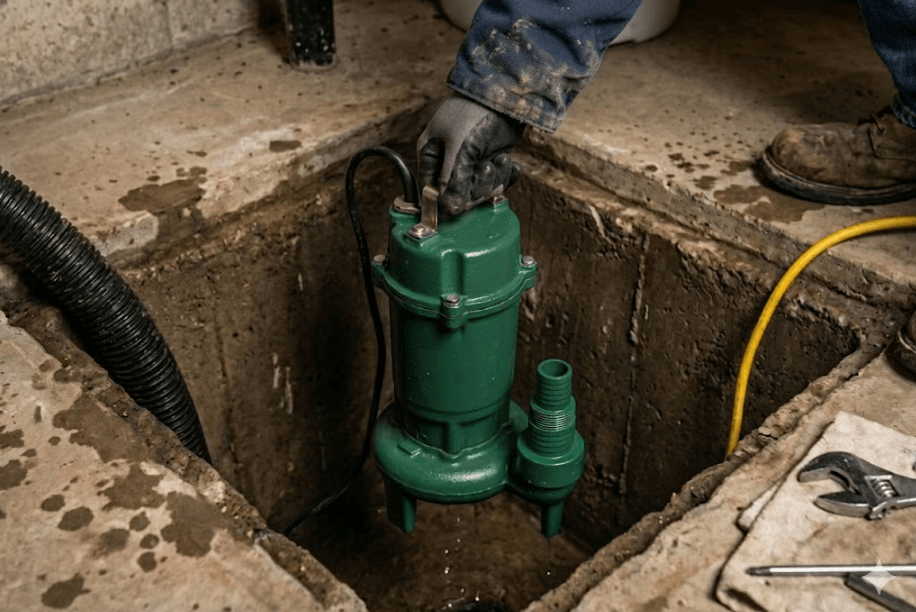
For homes considering equipment upgrades, we carry a range of submersible pump options suited to various output requirements and local installation standards.
Pipe Sizing, Slope, and Freeze Protection for Chicago Winters
A discharge line that freezes solid in January can back up the sump pit and defeat the entire purpose of the system. Standard residential sump pump discharge pipe runs 1.5 to 2 inches in diameter, depending on the pump’s output capacity. The pipe needs a consistent downward slope so water doesn’t sit and freeze inside.
For underground discharge runs, burying the line below the frost line significantly reduces freeze risk. In Chicago, the building code references a frost depth of 42 inches; surrounding suburbs may use similar or slightly different figures based on local amendments. Above-ground sections should be insulated or designed to drain fully after each pump cycle.
Licensed contractors should handle discharge line installation in most cases, especially where permits are required for new installations or modifications.
Sump Pump Discharge Rules Across Chicagoland Municipalities
Chicago’s municipal code sets a clear baseline, but Chicagoland spans hundreds of municipalities across multiple counties, each with its own interpretation and enforcement of sump pump code requirements.
How Cook County, DuPage, Lake, and Will County Rules Differ
Cook County municipalities generally follow or exceed Chicago’s prohibition on sanitary sewer connections, but permitted discharge locations and installation specifications vary. Some villages within Cook County have adopted incentive programs that encourage underground discharge to dry wells or approved storm infrastructure.
DuPage County has historically been proactive about stormwater management. Many DuPage municipalities require permits for discharge line installation and specify approved materials, burial depths, and outlet designs. Homeowners in communities like Naperville, Wheaton, or Lisle should expect a formal permitting process.
In Westmont specifically, discharge must terminate at least 25 feet from any Village right-of-way, with flow dissipating before reaching it. Verify current requirements with your local building department, as setback rules vary by municipality.
Lake County and Will County generally follow Illinois plumbing code standards while adding local amendments. In some Lake County communities, connection to a municipal storm sewer is encouraged or required when accessible infrastructure is nearby. Will County municipalities with newer subdivision infrastructure often have detailed, subdivision-specific drainage requirements. In Galesburg and similar downstate Illinois communities, storm sewer tie-ins may require a licensed plumber, and discharge must clear rights-of-way by at least 10 feet.
How to Verify Your Local Ordinance
Contact your village or city’s building or public works department directly. Most municipalities post current ordinances online, and many have specific sump pump compliance guides. Before any installation, request a pre-permit consultation to confirm that your planned discharge location and method meet current local requirements. This is especially worth doing in older homes where previous owners may have left behind non-compliant connections.
If you’re not sure where to start, contact our team and we can help point you toward the right components and professional resources for your municipality.
Frequently Asked Questions About Sump Pump Discharge in Chicagoland
Is it illegal to pump my sump discharge into the street in Chicago?
Yes. Discharging onto streets or sidewalks violates local codes, creates hazards, and contributes to improper runoff. Most Chicagoland municipalities prohibit this as a permanent discharge arrangement.
What are the 2026 Chicago sump pump regulations?
Chicago’s current rules maintain §18-29-712 standards, with no major changes from prior codes noted. Verify directly with the city for any updates, since rules can change.
How far should a sump pump drain from the house?
A general best practice is at least 10 feet from the foundation. Some municipalities require greater distances, and the termination point must direct water away from both your home and your neighbor’s property.
Does a sump pump discharge line need to be buried?
Burying the discharge line isn’t always legally required, but it’s strongly recommended in Chicago’s climate to prevent freeze-ups. Aim for burial at or below approximately 40 inches for maximum protection.
Do I need a permit to install a sump pump discharge line?
Many Chicagoland communities require permits for any modification to sump pump drainage systems, especially if connecting to storm infrastructure. Always check with your local building department before starting.
Find Compliant Sump Pump Discharge Solutions at Allied Plumbing & Heating Supply Co.
Allied Plumbing & Heating Supply Co. on Irving Park Rd. helps contractors and homeowners across the Chicago area source the right plumbing components for a compliant discharge line setup. Whether you need discharge piping, check valves, backflow preventers, or termination hardware suited to Chicago’s winters, our team understands local code requirements and can help you identify the right components for your specific situation.
Browse compliant Sump Systems to see what we carry, or contact our team to speak with a knowledgeable staff member before your next installation or upgrade.